


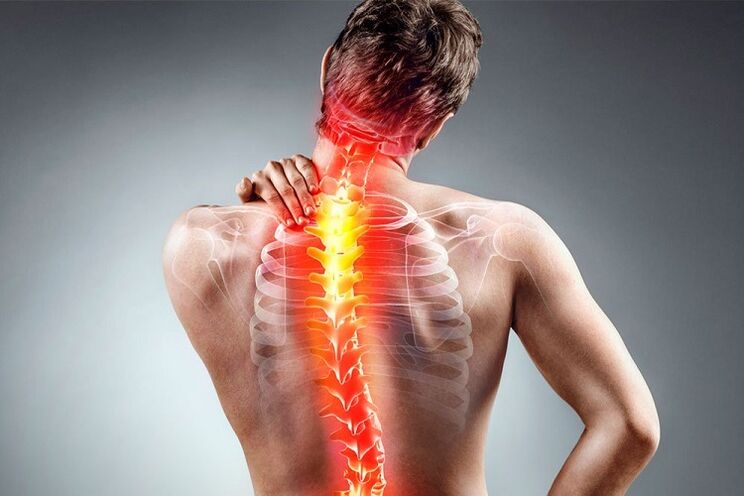
As people age, many people suffer from musculoskeletal disorders.The most common disease in this field of medicine is spinal osteochondrosis.Unfortunately, today it affects not only representatives of the older generation, but also young, energetic people.There are many reasons for this - sedentary work, lack of sports or other physical activity, etc.
what is it
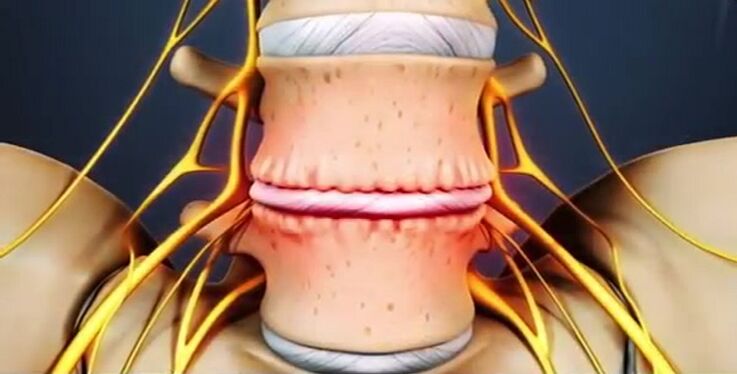
Doctors define vertebral osteochondrosis as a whole complex of disorders in the joints and cartilaginous connective tissues and organs, developing in each of the joints, but most often affecting the intervertebral discs.
Depending on the localization, cervical, thoracic and lumbar-clavicular osteochondrosis are distinguished.Despite the fact that spinal osteochondrosis appears after 40 years, the first signs of osteochondrosis are noticed as early as 20.
Reasons
There can be many factors that provoke the development of the disease.This includes hypothermia, displacement of the vertebrae as a result of injuries and heavy physical exertion.
However, the main causes of spinal osteochondrosis are the following:
- The habit of arching your back;
- Lack of a solid muscular corset;
- different types of scoliosis;
- Stress, nervous shock, depression, chronic fatigue;
- Sedentary lifestyle;
- Frequent weight lifting;
- Metabolic disorders (the body may lack calcium in the blood, magnesium, phosphorus, zinc and many other useful substances);
- Heredity;
- Untreated viral infections;
- Changes in hormonal levels, both in women and in men;
- Various back injuries.
Most often, athletes, loaders, builders and everyone whose profession is related to active physical labor are susceptible to osteochondrosis.For those who, on the contrary, lead a sedentary lifestyle, doctors recommend moving more, engaging in some preventive sports, as well as proper nutrition so that the body receives all the necessary vitamins, minerals and trace elements.
Symptoms
The symptoms of osteochondrosis directly depend on the affected spinal area.
- Osteochondrosis of the cervical vertebraeThe spine is accompanied by frequent pains in the neck, passing to the back and chest, tense muscles of the neck that can cause pain when touched, swelling and numbness of the tongue, a feeling of goosebumps and numbness in the neck and palms, a feeling of general weakness in the neck and shoulders.
- Osteochondrosis of the thoracic regionspine has the following symptoms: sharp pain in the sternum, feeling of compression in the chest and intercostal pain may occur during physical activity.
- Osteochondrosis of the lumbosacral regionspine is usually accompanied by pain in the lower back, which can radiate to the legs, sacrum and groin, lack of sensitivity in the legs, cold hands and feet, a feeling of pins and needles in the lower extremities.
If one or more symptoms of this disease appear, you should immediately consult a specialist, because osteochondrosis can lead to disturbances in the functioning of many organs and systems, pinching of nerves, as well as migraines, vertigo and insomnia.Lumbosacral osteochondrosis is particularly dangerous, because subsequently there is a risk of developing heart and vascular diseases, diseases of the genitourinary system, scoliosis and displacement of the intervertebral discs.
Stages
Osteochondrosis develops gradually and has several stages of development:
- At the first stageIt is still difficult to understand that the disease has occurred.The symptoms are not expressed, the patient experiences only mild discomfort.Slight pains in the back and lower back occur from time to time, but very often they are due to overwork and increased physical activity.Very often, osteochondrosis of the first degree is diagnosed accidentally during a routine examination of the patient.
- In the second stagepain occurs more often and becomes stronger, and cartilage tissue deformation processes begin.The easiest way to treat osteochondrosis is in the second stage, since the doctor can already see all the changes occurring in the body.Painkillers can be added to the general complex therapy.
- To the third stagedeformation of the spine occurs, scoliosis, kyphosis and other back diseases begin to develop.Treatment is aimed at modifying the spinal defects and minimizing the resulting defects.
- At the fourth stageosteochondrosis, it becomes difficult for the patient to move, cartilage tissue thickens and some vertebrae are displaced.Pain accompanies a person constantly.Very often, at the fourth stage of the disease, the patient is recognized as disabled.
Diagnosis
Based on the above symptoms, the doctor can make a preliminary diagnosis.First of all, the doctor will check the condition of the patient's spine in different positions, as well as during movement.After that, hardware diagnostics will be performed to clarify the diagnosis and clarify possible complications.
The main types of diagnosis of osteochondrosis of the musculoskeletal system include:
- MRI;
- CT (computed tomography);
- x-ray examination;
- Echography (ultrasound examination);
- examination of the arterial vessels of the brain.
After analyzing the patient's condition, the doctor will identify possible concomitant diseases such as hernia, radiculitis and displaced intervertebral discs.
The patient, in turn, must remember that the symptoms of osteochondrosis can be signs of any other disease, therefore the quality of the diagnosis must be the highest, since treatment will be prescribed based on the final result.
Consequences
One of the most dangerous consequences of osteochondrosis is complete or partial muscle atrophy.For many patients, pain is relieved only with painkillers.
If you do not contact a specialist in time, there is a risk of developing a hernia, cholesterol plaques, as a result of which blood pressure and oxygen supply to cells are disturbed.
In patients with the fourth stage of osteochondrosis, heart rhythm disorders, abnormal functioning of the respiratory system may occur;the organs of sight and hearing may also be affected, and the coordination of movements may be impaired.
Due to the fact that osteochondrosis primarily affects the blood supply system, the entire human body is at risk.It is worth noting that people with impaired metabolism most often suffer from this disease.Osteochondrosis is often accompanied by vegetative-vascular dystonia.
Treatment
Treatment of osteochondrosis can be of two types:
- conservative;
- surgically.
The choice of treatment method depends on the severity of the disease, established complications and the body's internal forces to recover after the operation.
In a conservative treatment method, the patient will be prescribed a whole range of drugs and other techniques, such as massage, therapeutic exercises, exercise therapy.This method of treatment includes medication and hardware treatment.
The most commonly used conservative treatment methods are:
- Therapeutic physical culture, the exercises of which will be individually tailored to the condition of the patient's body.
- Acupuncture.
- Massage and hydromassage.
- Magnetic therapy and vibration stimulation.
- Ultrasound and laser therapy.
- Medicines.
- Proper nutrition, which will also be individually tailored to the patient.
- Psychotherapy.
It should be noted that if conservative treatment is chosen incorrectly, the patient's condition may worsen.Self-treatment for osteochondrosis is excluded.
The surgical method of treating osteochondrosis is aimed at stabilizing the motor activity of the damaged segments of the spine.In the case of a hernia of the spine, the operation can be performed in two ways: standard with a scalpel or with a laser.The choice is made by the doctor together with the patient, taking into account not only his wishes, but also the condition of the body.According to statistics, surgical intervention is used in 15% of cases.However, the success rate is only 3%.
Prevention
It should be remembered that no one is immune from osteochondrosis, so it is better to carry out timely prevention of this disease:
- First of all, you should always watch your posture by keeping your back and neck straight, even when you are working on the computer.
- It is also necessary to devote enough time to sports or other physical activity, thereby strengthening the muscular corset.Exercising in the pool is very suitable for these purposes.
- Special orthopedic mattresses and pillows can also be a good prevention of osteochondrosis.
- Particular attention should be paid to the method of lifting weights - to relieve the spine from excessive stress, you must first squat and then pick up something heavy.It should be noted that you cannot lift more than 17 kg at a time.
- The basic principles of diet are also important elements in the treatment of osteochondrosis.Food should supply all useful vitamins and minerals to the body, especially during the period of vitamin deficiency.Avoid consuming too much caffeine, alcohol, chocolate, fast food and carbonated drinks.The diet should include vegetables and fruits as sources of fiber, as well as meat, fish and legumes as sources of protein.
Every person should remember that unnoticed osteochondrosis can be extremely dangerous for the whole body;all organs and systems of the body are at risk.It is necessary to closely monitor the general state of your health and undergo examinations by a specialist once every six months.